Jetpack's built-in visitor analytics. It records page views, referring sites, search terms, and outbound link clicks, and also carries the shared visitor-tracking library used by Jetpack Instant Search and WooCommerce Analytics.
Service URL: automattic.com (opens in a new window)
tk_aip
Stores a list of anonymous visitor IDs so they can be merged into one identity once a visitor is recognized.
Up to 5 years
tk_tc
Used once per page load to work out which cookie domain the Tracks library should use, then removed as soon as it's read back.
Session (deleted immediately after use)
tk_qs
Queues analytics events for Jetpack's Tracks library so none are lost if the page closes before they can be sent.
30 minutes
tk_ai
Stores a randomly-generated anonymous visitor ID so Jetpack's Tracks analytics library can link tracking events to the same visitor.
Session in wp-admin; up to 5 years on the frontend


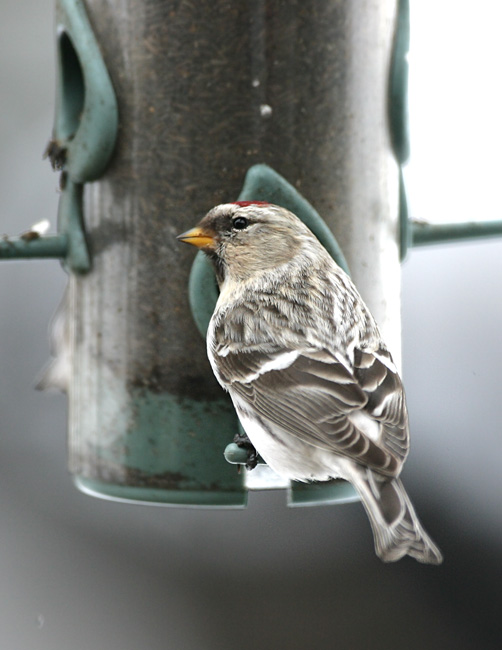
Hello,
Michigan birder would be interested in your thoughts on the photos that you have a link to here.
I saw the bird today. It is a lifer for me so I have no experience with Hoary but by looking over your guide I was a bit concerned about the bill size. Is there a lot of variation in bill size? I expected this bird to stand out but a group of birders had to be careful and look over each light colored bird.
Anyway, we would appreciate your thoughts.
Here is the link if you need it
http://www.umich.edu/~bbowman/birds/se_mich/photos.html
Andy Dettling
Canton, MI
Hi Andy,
I think this bird is well within the “safe” zone for Hoary. The overall appearance of back, underparts, and head is pale and grayish, or “frosty” looking. The few distinct dark streaks on the sides of the breast fading to faint pale lines on the flanks are outside the range of variation of Common. Even adult male Commons (which have reduced streaking) still show dark streaks along the flanks. The bill looks about the same size as the Common next to it, which is fine for Hoary, and in a couple of views it looks fluffy around the forehead. It also has very limited dark color around the base of the bill, both on the chin and the forehead, which is variable but when it is as limited as this it is another good indicator of the overall paleness. I have no reservations about calling this a Hoary.
Thanks for you numerous posts on the Hoary vs. Common Redpoll question. I have linked to the initial post at my blog at http://wildbirdsunlimited.typepad.com/the_zen_birdfeeder/2008/01/entering-the-ho.html
If you have a moment, I have a number of photographs of a potential Hoary Redpoll. I’ve asked local birders for their thoughts, and I’d be honored to have you weigh in on the bird as well.
Thanks in advance.