

Male and female Chipping Sparrow are not exactly alike, and when viewing a mated pair the differences are usually clear.
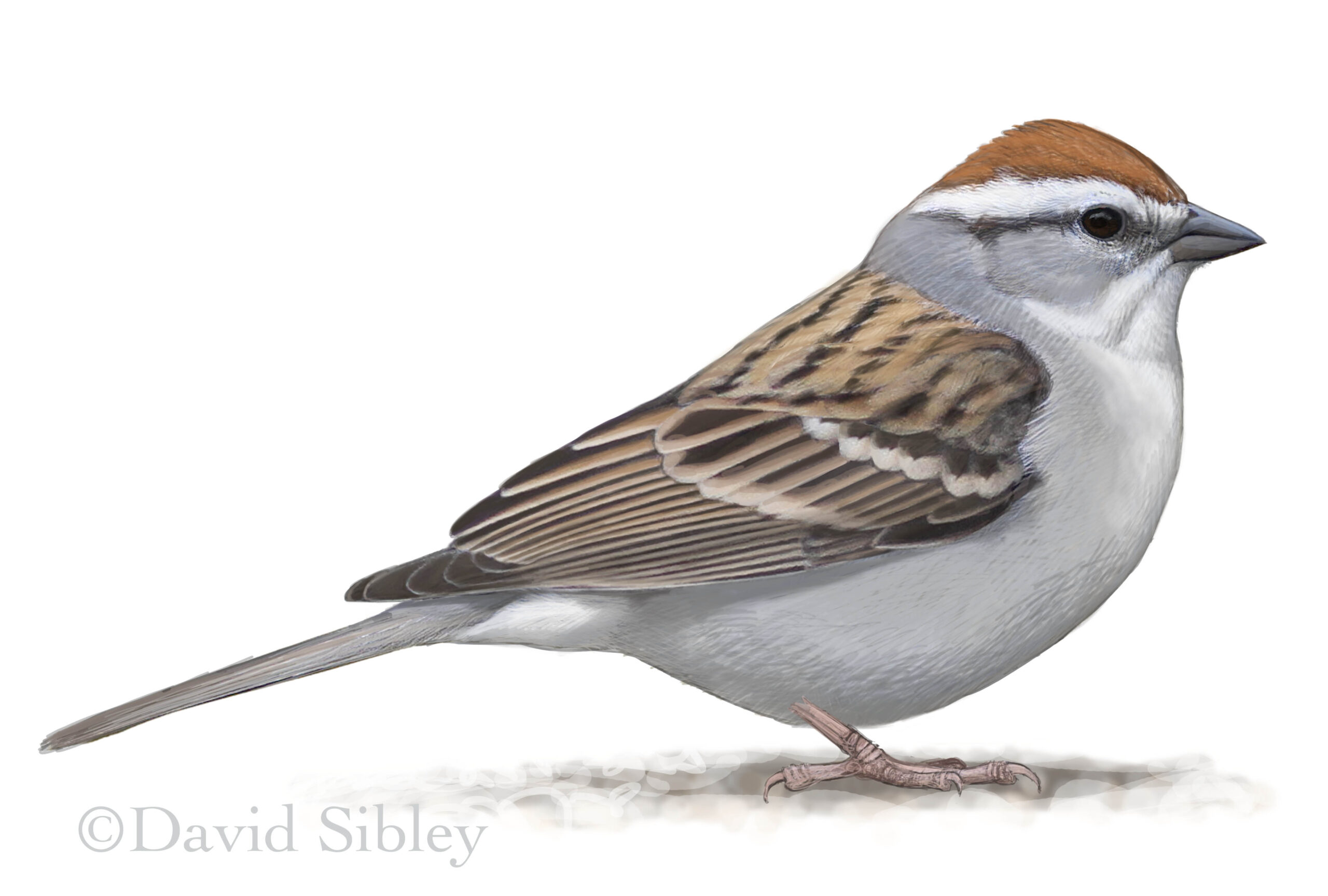
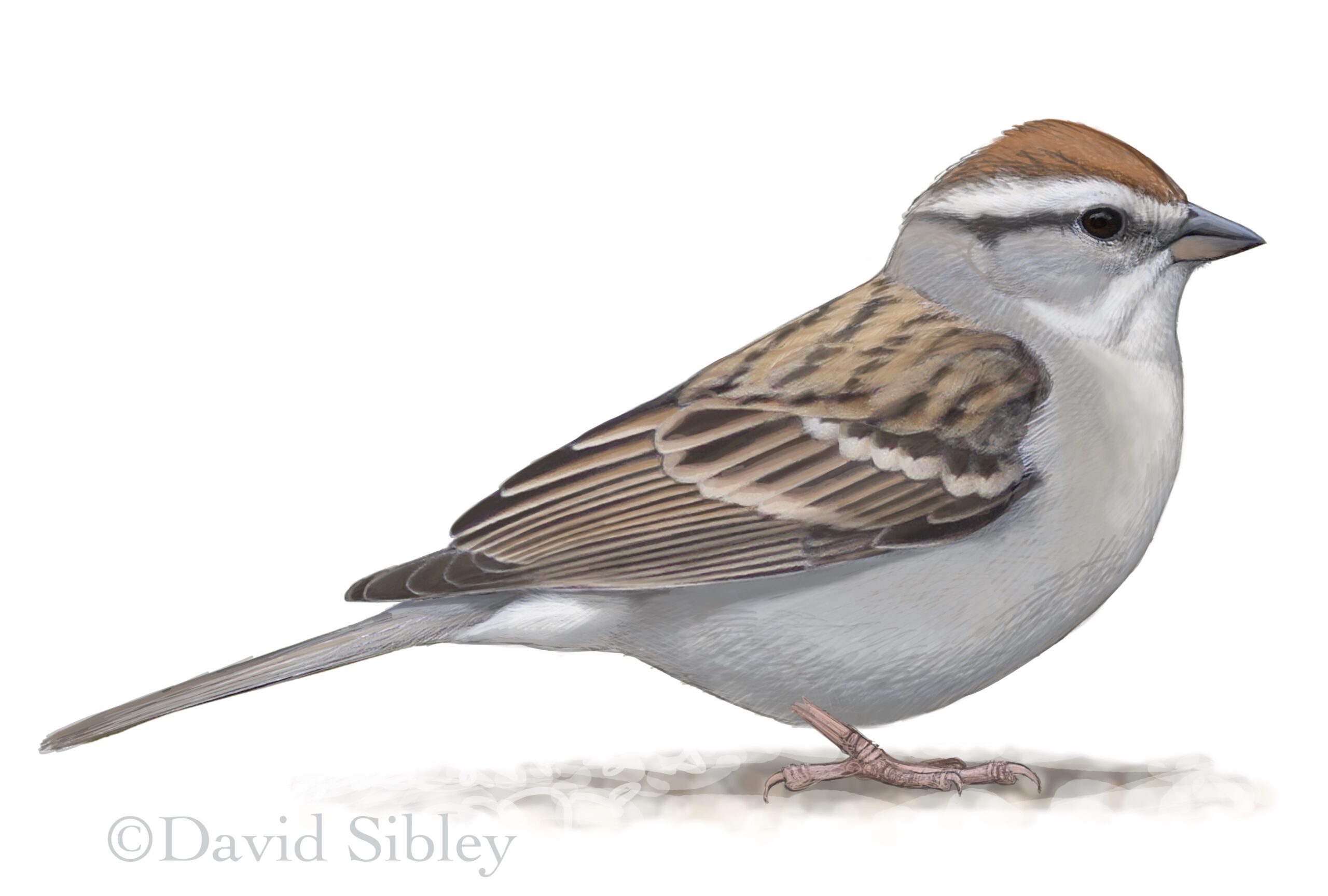
Compare the overall impression of “colorfulness” in these two illustrations, with the male (upper image) showing brighter white on eyebrow and throat, brighter and cleaner rufous crown, darker facial markings, cleaner gray breast, and more colorful brown back and wings
Ask any birder, or check any reference book, and they will tell you that male and female Chipping Sparrows look alike. As a broad generalization that can be said of lots of species — from Canada Goose to Red-tailed Hawk, Gray Catbird to Song Sparrow — but it’s not entirely true. Look a little closer and you will be able to distinguish males and females of any species, at least under certain circumstances.
In the case of Chipping Sparrows, you need to be looking at a mated pair in breeding plumage in spring and early summer. With the challenge reduced to a binary decision — one each of male and female — and a direct comparison, the differences are usually apparent and sometimes obvious. Among songbirds the female generally looks a little smaller, often thinner-necked, with drabber colors and less contrasting pattern.
The differences are subtle enough that you probably won’t feel confident identifying the sex of a solitary bird, or any birds away from the nesting territory, but you can look for the drabbest and brightest birds and also take note of size and shape. Challenges like that make you look a little more carefully and can be very helpful in understanding and categorizing variation.
I wrote about noticing this kind of variation in a previous post “Posture and shape distinguishes male and female Dark-eyed Juncos”