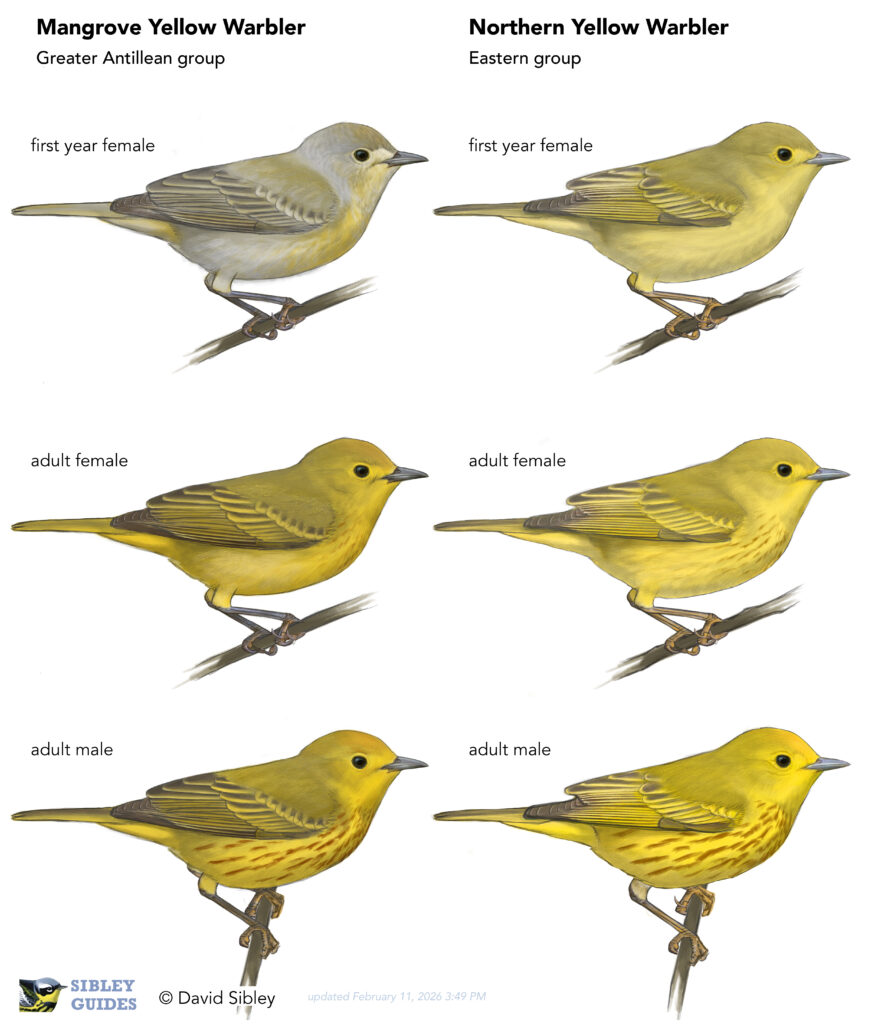
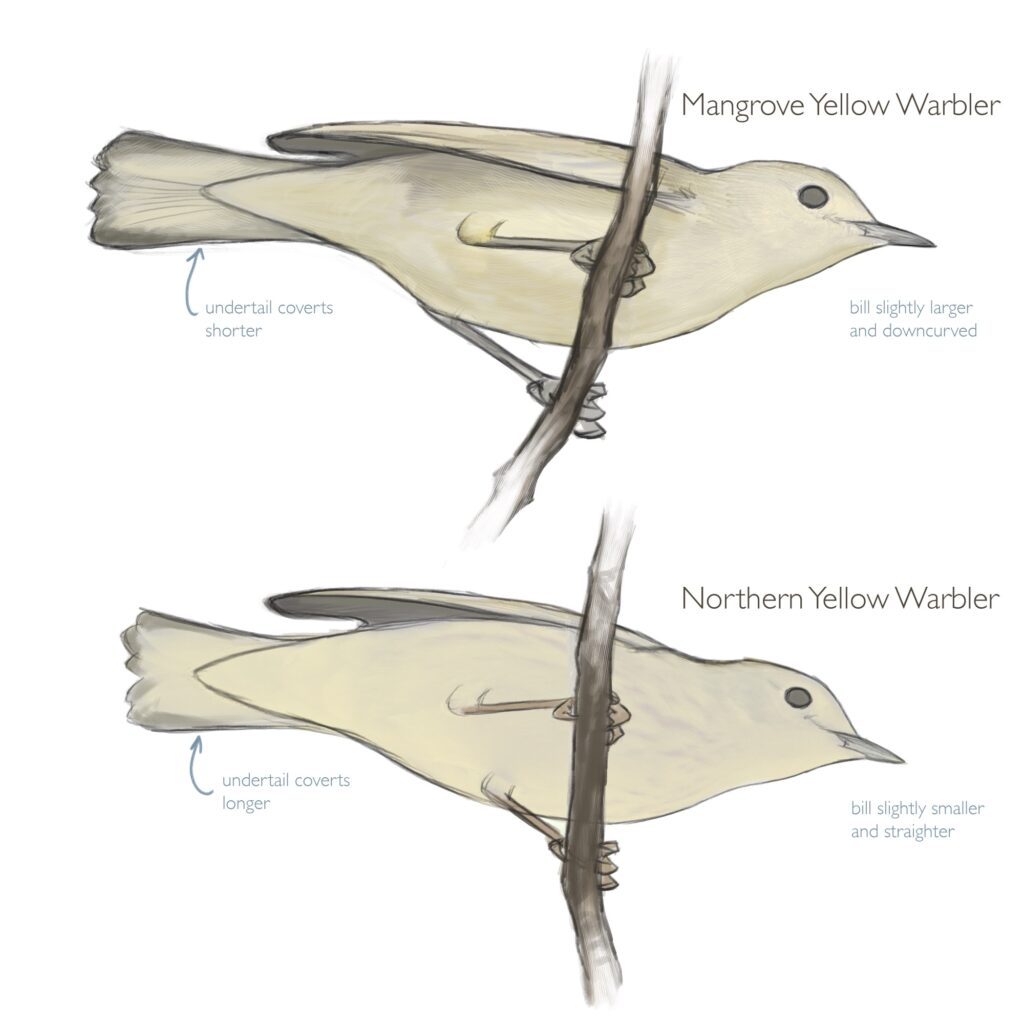
The two species of Yellow Warbler differ in structure

The split of Yellow Warbler into two species in 2025 (by eBird) brings a challenging identification issue into the mainstream. It is possible to identify most by plumage color (more details coming soon), but differences in the shape of body, wings, and bill provide more consistent clues for identification. Northern undertail coverts longer and fuller, […]

The two species of Yellow Warbler differ in structure Read More »

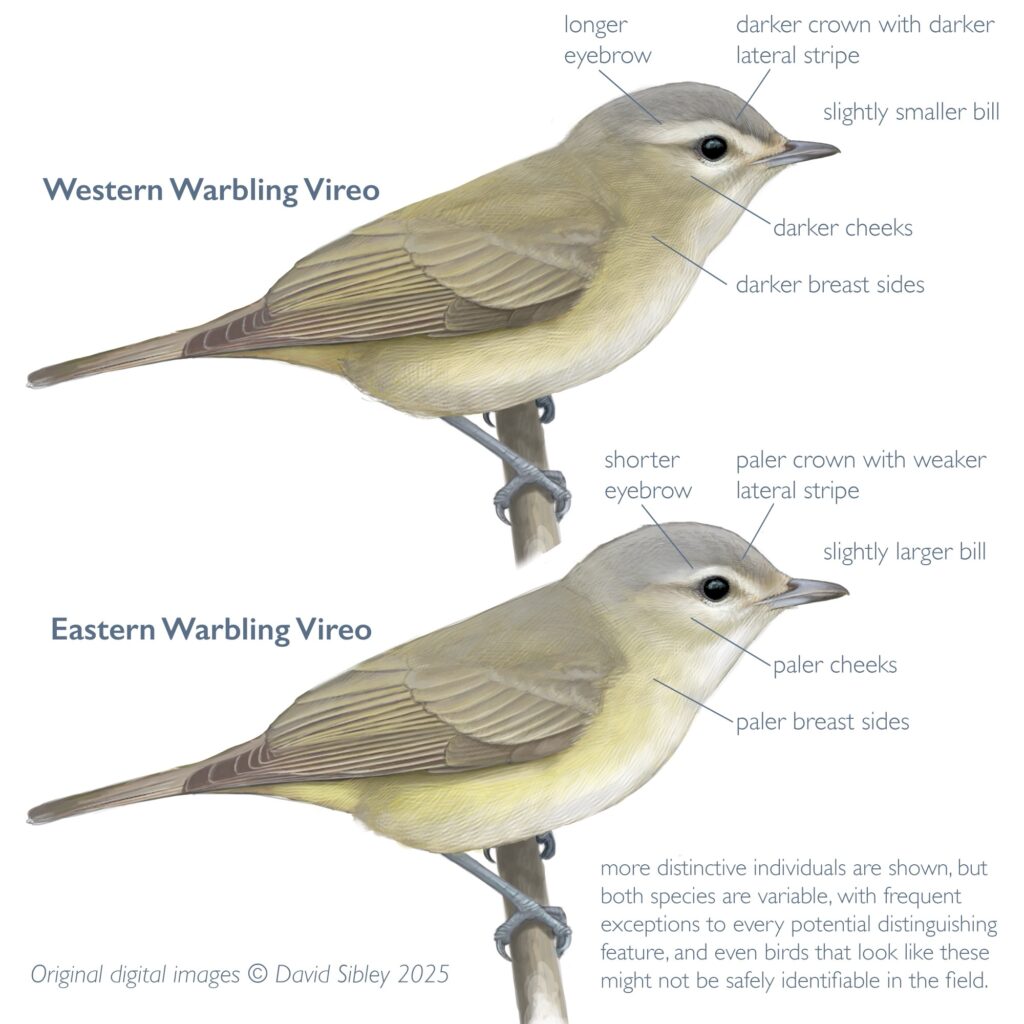
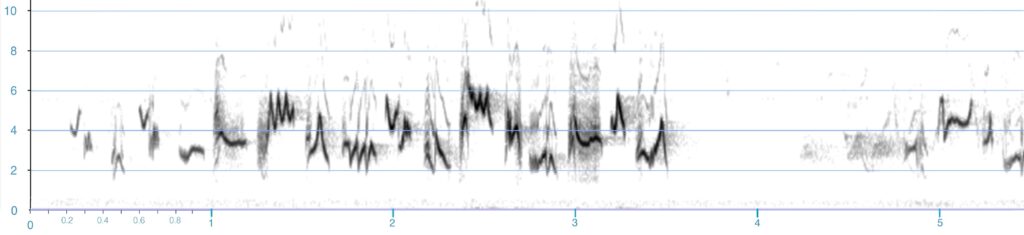
Identification of Eastern and Western Warbling Vireos

Summary: In practice virtually all will be identified presumptively by range. Positive identification depends on careful analysis of details of song (but questions remain about variation in song). Positive identification of silent birds is not possible on current knowledge. The Warbling Vireos were considered a single continent-wide species until 2025, when two species – Eastern

Identification of Eastern and Western Warbling Vireos Read More »

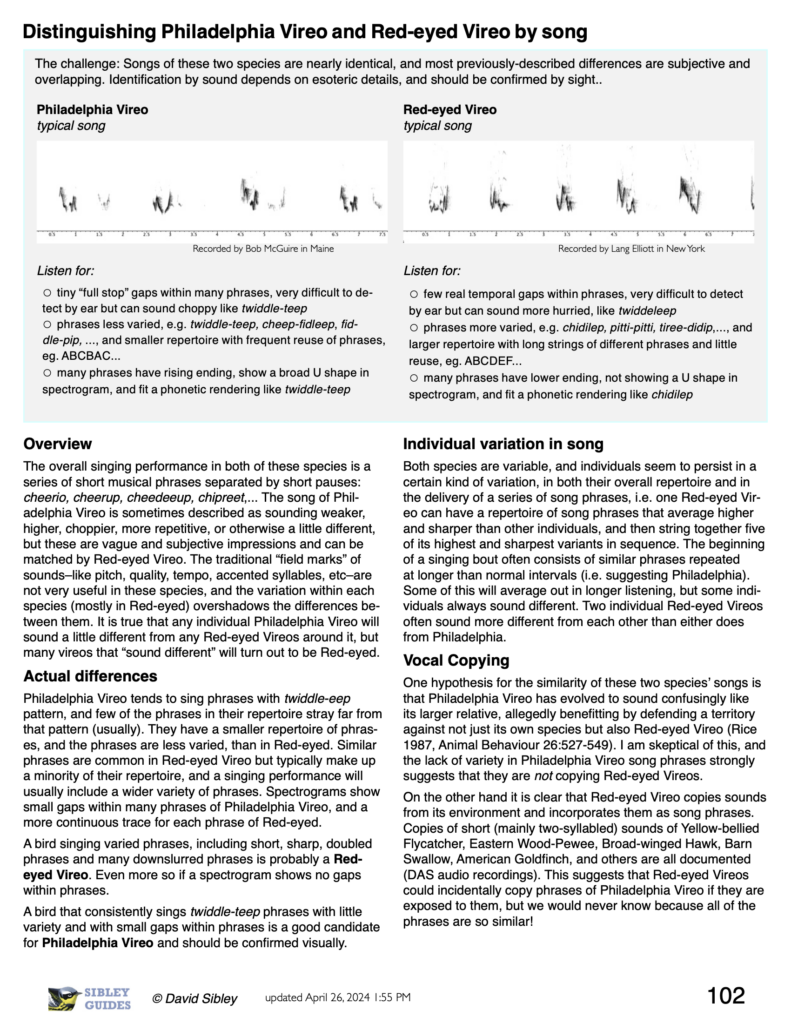
Distinguishing Philadelphia and Red-eyed Vireos by song: Is it possible?

Possible? It might be, but most of the widely published “differences” are too subjective and/or too variable to be of any value. I dug into this a couple of years ago and discovered some details that seem more reliable, which are summarized in the one page file here (also as a pdf via this link:

Distinguishing Philadelphia and Red-eyed Vireos by song: Is it possible? Read More »

Determining age and sex of Rose-breasted Grosbeaks in spring and summer

I put together this matrix of variation in breeding plumage Rose-breasted Grosbeaks, showing the differences between each of the four age-sex classes. In this species it’s relatively easy to distinguish males from females, a little harder to distinguish one-year-old males from older males, and nearly impossible to determine the age of females. As in many

Determining age and sex of Rose-breasted Grosbeaks in spring and summer Read More »